
Blog 3: Credibility of Māori Oral History
- Kerry Paul

- May 10
- 4 min read
Updated: Jun 30
JOURNEY 1 - SERIES 4 - BLOG 3 - A PART OF 10 BLOGS IN SERIES 4. - Reading time: 4 Mins

Māori oral traditions suggest people may already have been present in New Zealand when Polynesian ancestors arrived. These accounts raise an important and often contentious question: how much credibility should be assigned to oral histories that have been passed down through many generations? This discussion adds another dimension to New Zealand’s origin story. These migration patterns contribute to broader debates surrounding Southeast Asian migration to New Zealand and are frequently compared with established interpretations of Polynesian migration to New Zealand. Together, these competing perspectives continue to shape ongoing discussions about New Zealand’s first settlers.
Oral History as a Legitimate Historical Record
Oral history is internationally recognised as a valid and valuable component of the historical record, particularly for societies in which knowledge, law, and identity were preserved without writing. Māori tradition is no exception. Māori oral histories extend back approximately forty generations, preserved through whakapapa (genealogy), kōrero tuku iho (narratives handed down), waiata (song), karakia, and whakataukī.

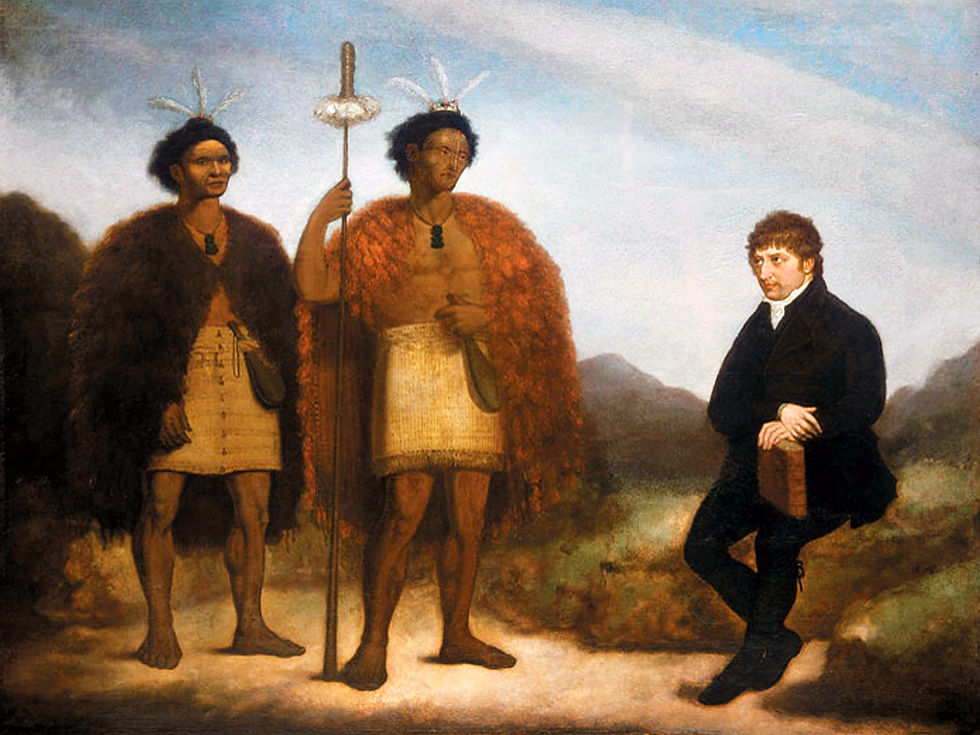
Importantly, Māori was exclusively an oral language until the early nineteenth century. The development of a written form occurred only after English missionaries—most notably Thomas Kendall—worked closely with highly knowledgeable rangatira such as Hongi Hika and Waikato. Their collaboration underscores a critical point: Māori were not passive recipients of literacy, but active custodians of their own history, determining how their language and traditions would be recorded.
Reliability and Transmission Across Generations
It is often argued that oral histories are inherently less reliable than written documents because they rely on memory and interpretation. While this concern warrants consideration, it is not unique to oral sources. Written histories are also shaped by authorial bias, political objectives, selective documentation, and later editorial interpretation.
Oral histories are not static. Variations, reinterpretations, and emphases inevitably emerge as stories move through generations.
Accounts of Earlier Peoples and Cultural Diversity
A notable feature of Māori oral traditions is the repeated reference to people already living in New Zealand when later arrivals came. These accounts do not describe a single, uniform population, but rather suggest multiple groups, arriving at different times and potentially from different directions. Over time, these communities are described as interacting, intermarrying, and forming new social groupings.
Such traditions are consistent with broader patterns of human migration elsewhere in the world, where successive waves of settlement rarely occur in isolation. They also resonate with observations of physical diversity within Māori communities noted by early European visitors, who commented on variations in stature, complexion, and hair colour. While physical appearance alone cannot determine origin, these descriptions contributed to early debates about population history.
Language provides further context. Early European settlers referred collectively to Indigenous inhabitants as “New Zealanders.” The term “Māori,” meaning “normal” or “ordinary,” emerged later as a means of distinguishing tangata whenua from European newcomers. This linguistic evolution hints at a more complex social reality than a single, recent founding population.
The Importance of Nineteenth‑Century Recorded Oral Histories
Particular attention should be given to oral histories recorded during the nineteenth century, when bilingual commentators documented Māori accounts firsthand. These records were produced approximately 150 years ago—much closer in time to early settlement events than contemporary interpretations. Critically, many of these recorders spoke Māori fluently and collected information directly from kaumātua whose knowledge had been inherited through fewer generational links.
Although mechanical recording did not exist at the time, the proximity of these accounts to the source traditions enhances their historical significance. They provide a view of Māori explanations of the past before later academic frameworks, political pressures, or standardised narratives shaped how those traditions were interpreted.
Reassessing Credibility with Balance and Respect
Assessing the credibility of Māori oral history does not require accepting every detail as literal fact, nor dismissing it as myth. Rather, it calls for the same critical, contextual, and comparative analysis applied to written sources, combined with respect for the intellectual systems that preserved this knowledge for centuries.
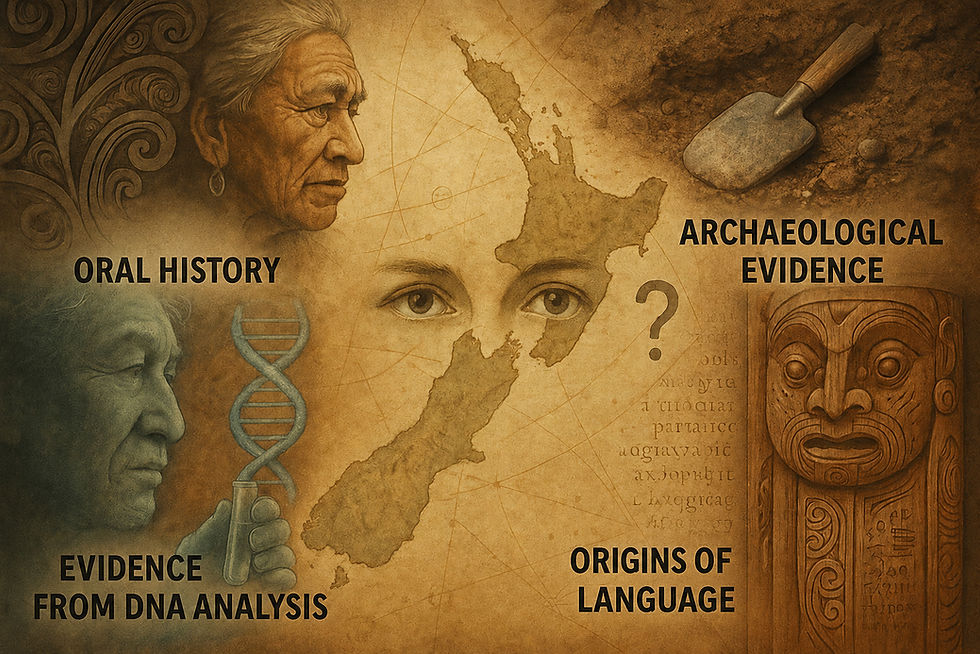
When read alongside archaeology, linguistics, genetics, and historical documentation, oral traditions contribute essential perspectives that cannot be recovered elsewhere. They remind us that the story of New Zealand’s settlement may be more layered and complex than any single line of evidence can reveal.
Key Takeaways
Māori oral tradition is a legitimate historical record, preserving knowledge across roughly forty generations through structured forms such as whakapapa, kōrero tuku iho, waiata, karakia, and whakataukī.
Oral histories should be assessed critically—like written sources—because both are shaped by bias, interpretation, and transmission over time; variation does not automatically mean unreliability.
Nineteenth-century recordings of Māori accounts, alongside comparative evidence (archaeology, linguistics, genetics), suggest New Zealand’s settlement story may involve earlier or multiple populations and warrants a balanced, evidence-based reassessment.
To continue reading Series 4 we invite you to join us:


Comments