
Blog 2: India – The Road to Independence
- Kerry Paul

- Jun 18
- 6 min read
Updated: Jun 30
JOURNEY 4 - SERIES 1 - BLOG 2 - A PART OF 8 BLOGS IN SERIES 1 - Reading time: 4 Mins



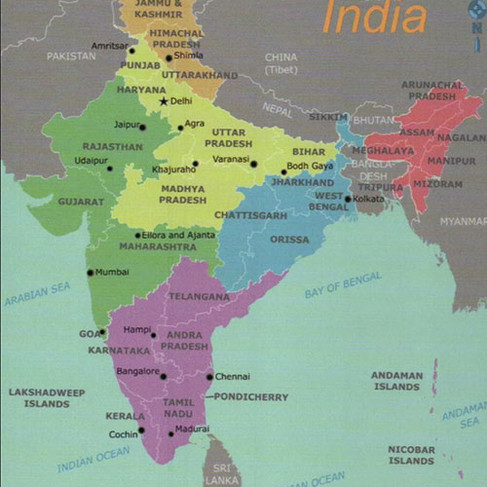
My recent journey through India was not simply about visiting historical sites or experiencing a different culture. It was an opportunity to understand how modern India was created and why the events surrounding independence continue to shape the country today.
One of the most significant moments in modern history occurred in 1947 when British rule ended and two new nations, India and Pakistan, emerged almost simultaneously. The consequences of that decision continue to influence politics, economics, religion, and security across South Asia nearly eighty years later.
As I travelled across India, I became increasingly aware that understanding modern India requires understanding the long and difficult road to independence.
British Rule and the Transformation of India
By 1849, Britain had effectively established control over most of the Indian subcontinent, although many princely states retained a degree of local autonomy under their own rulers.
What fascinated me was the extent to which India had been an economic powerhouse before British domination. For centuries, India was one of the world's largest manufacturing centres, renowned for producing high-quality textiles, steel, shipbuilding materials, spices, and luxury goods that were exported throughout Asia, the Middle East, Africa, and Europe.
The arrival of the British East India Company fundamentally altered this economic structure.
From the mid-1700s onward, Britain gradually shifted manufacturing activity from India to Britain itself. Indian industries declined while India increasingly became a supplier of raw materials such as cotton, indigo, grain, tea, and opium. These products were exported to Britain and throughout the British Empire.
What struck me was how effectively Britain used India's resources to fuel its own Industrial Revolution. Taxes collected from Indian citizens were often used to purchase Indian products for export, creating a system that helped finance British industrial growth while simultaneously weakening India's traditional manufacturing base.
The economic consequences were profound. A country that had once been one of the world's leading industrial producers became increasingly dependent on agriculture and raw material exports.
Growing Resistance to British Rule
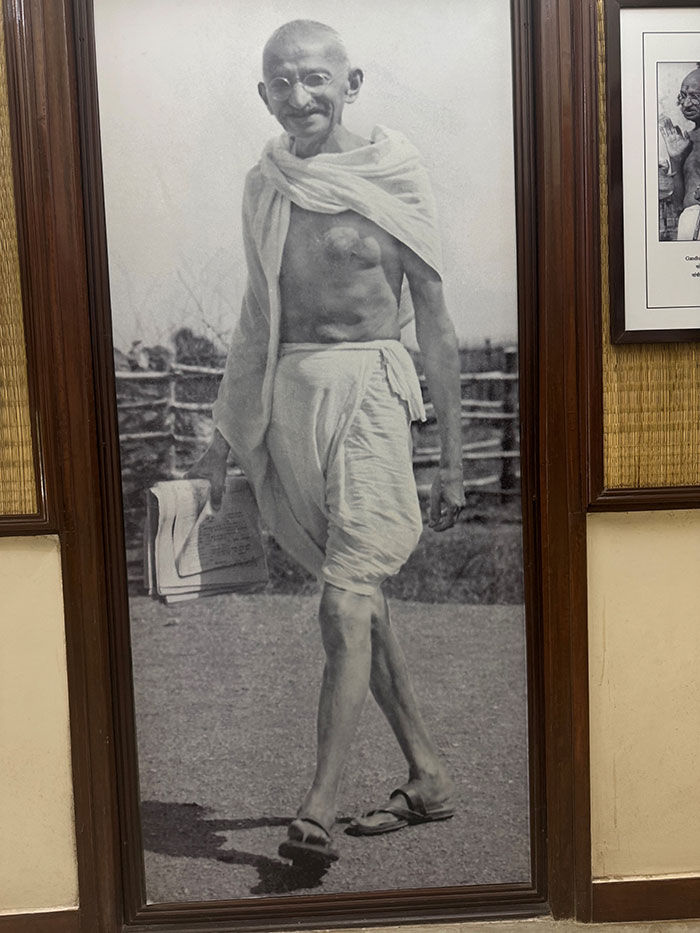
By the early twentieth century, opposition to British rule was growing rapidly.
The Indian National Congress emerged as the leading political force advocating greater self-government and eventually complete independence. While many leaders contributed to the movement, no individual became more influential than Mohandas Karamchand Gandhi.
Gandhi transformed the independence movement by promoting non-violent resistance on a national scale. His philosophy of civil disobedience challenged British authority while maintaining a moral high ground that attracted worldwide attention.

As I reflected on Gandhi's achievements, I realised that his influence extended far beyond India. His methods inspired later civil rights movements around the world, including those led by figures such as Martin Luther King Jr. in the United States and Nelson Mandela in South Africa.
The Quit India Movement of 1942 represented one of the final major campaigns against British rule. Although many leaders were imprisoned, the movement demonstrated that British authority was becoming increasingly difficult to sustain.
In many respects, India's independence movement helped redefine how oppressed peoples around the world could challenge colonial rule.
Independence and the Challenge of Partition
While most Indians agreed that British rule should end, there was growing disagreement about what an independent India should look like.
Two political leaders emerged at the centre of this debate.
Mohammed Ali Jinnah, leader of the Muslim League, believed that India's Muslim population required its own independent nation to protect its political and cultural interests.
Jawaharlal Nehru, leader of the Indian National Congress, envisioned a united and independent India that would include the territories that today comprise India, Pakistan, and Bangladesh.
As tensions between Hindu and Muslim communities intensified, violence erupted in many regions.
British officials, together with Jinnah and Nehru, ultimately agreed to partition the country into separate nations despite Gandhi's strong opposition. Gandhi believed that Hindus and Muslims could coexist within a united India and spent his final months attempting to reduce communal violence.
Tragically, Gandhi was assassinated in January 1948 by a Hindu nationalist who opposed his efforts to promote reconciliation.
The Largest Migration in Human History
One of the most astonishing aspects of partition was the enormous movement of people that followed.
The boundary lines between India and Pakistan were drawn rapidly by British administrators, dividing communities that had lived together for centuries.
Millions of Hindus and Sikhs living in what became Pakistan migrated into India, while millions of Muslims moved from India into Pakistan.
The scale of this migration is difficult to comprehend.
More than 10 million people crossed newly created borders in one of the largest population movements in human history. Entire villages relocated. Families were separated. Homes, businesses, and livelihoods were abandoned.
Even more tragic was the violence that accompanied the migration. Historians estimate that at least one million people lost their lives during the upheaval.
As I learned more about these events, I gained a deeper appreciation of how profoundly partition shaped the identities of both India and Pakistan.
The Creation of Bangladesh
Partition initially created two parts of Pakistan: West Pakistan and East Pakistan.
The arrangement proved difficult because the two regions were separated by more than 1,600 kilometres of Indian territory and possessed distinct languages, cultures, and economic interests.
By 1971, tensions between the two regions had escalated into civil war.
Millions of refugees fled East Pakistan into India, creating both a humanitarian crisis and a security challenge. India eventually intervened militarily on behalf of East Pakistan.
The conflict ended with a decisive Indian victory and the creation of the independent nation of Bangladesh.
This war significantly altered the political landscape of South Asia and reinforced India's position as the dominant regional power.
Independence Did Not End Regional Tensions
While independence ended British rule, it did not resolve all of the region's challenges.
Throughout my travels, I became aware that several major geopolitical issues continue to influence India's relationships with its neighbours.
Pakistan
India and Pakistan have fought several wars since independence and continue to maintain one of the world's most heavily militarised borders.
The relationship is shaped by historical grievances, religious differences, security concerns, and competing national narratives.
Although periods of cooperation have occurred, mutual distrust remains significant, particularly regarding terrorism, border security, and the future of Kashmir.
Kashmir
Kashmir remains one of the most complex territorial disputes in the world.
Today, the region is divided among India, Pakistan, and China, with each country controlling different areas and maintaining competing claims.
In recent years, India's decision to revoke Article 370, which granted special constitutional status to Jammu and Kashmir, has generated considerable debate. Supporters argue that it promotes integration and economic development, while critics fear it could weaken the region's distinct cultural and political identity.
China
India's relationship with China presents another major strategic challenge.
The two countries fought a brief but significant war in 1962 over disputed Himalayan borders. China secured control over territory claimed by India, leaving a legacy of mistrust that continues today.
Despite ongoing border disagreements, both countries recognise the importance of maintaining stability between two of the world's largest populations and fastest-growing economies.
Bangladesh
Relations between India and Bangladesh have generally improved since Bangladesh gained independence in 1971.
However, issues such as migration, border management, water resources, trade, and political stability remain important considerations for both governments.
Recent political developments in Bangladesh have generated concern in New Delhi, particularly regarding regional security and economic cooperation.
How India Shaped the Modern World
As I reflected on India's journey to independence, I realised that its significance extends far beyond South Asia.
India demonstrated that a vast colonial society could successfully challenge imperial rule. Gandhi's philosophy of non-violent resistance influenced political movements around the globe. The partition of India reshaped international borders and remains one of the most important geopolitical events of the twentieth century.
Perhaps most importantly, India's independence accelerated the broader process of decolonisation that transformed Asia, Africa, and the Middle East after the Second World War.
Today, India stands as the world's largest democracy and one of its fastest-growing economies. Yet many of the issues that emerged during independence—national identity, religious diversity, border disputes, and regional power dynamics—continue to shape the nation.
My visit helped me understand that India's road to independence was not simply the end of British rule. It was the beginning of a new chapter that continues to influence not only India and its neighbours but also the wider world.
To continue reading Series 1 we invite you to join us:

Comments