
Blog 1: India – Land of Kings

Updated: Jul 7
JOURNEY 4 - SERIES 1 - BLOG 1 - A PART OF 8 BLOGS IN SERIES 1 - Reading time: 4 Mins

My recent journey through India was far more than a sightseeing experience. It was an opportunity to understand how one of the world’s oldest civilizations has evolved over thousands of years and how its past continues to influence its present. While India is often associated with its vast population, rapid economic growth, and cultural diversity, one of my most significant discoveries was the enduring legacy of its royal families.
As I travelled through Rajasthan, often referred to as the "Land of Kings," I became increasingly aware that India's royal heritage is not simply a relic of history. It remains woven into the country's cultural identity, tourism industry, and social fabric. The royal families of Jaipur, Udaipur, Jodhpur, and other former kingdoms continue to play an important role in preserving India's heritage while adapting to the realities of modern India.
The Kingdoms That Built India
To understand modern India, it is important to appreciate the scale of its royal past. Prior to independence in 1947, the Indian subcontinent consisted of approximately 567 princely states and kingdoms. Some were vast territories with populations in the millions, while others were relatively small. Together, they formed a complex political landscape unlike anything I had previously encountered.
What fascinated me most was that throughout India's long history, powerful empires such as the Mauryas, Guptas, Delhi Sultanate, Mughals, and eventually the British Empire rarely governed every village directly. Instead, they relied heavily on local rulers to administer their territories, maintain order, collect taxes, and provide military support when required.
This relationship between empire and kingdom became one of the defining characteristics of Indian governance. Even the most powerful emperors understood that successful rule depended on cooperation with regional rulers who commanded local loyalty and possessed deep knowledge of their people and territories.
Rajasthan: The Living Heart of Royal India
Nowhere is this royal legacy more visible than in Rajasthan. As I travelled through Jaipur, Jodhpur, and Udaipur, I quickly realised that these cities were not merely historic locations. They were once thriving centres of political power, diplomacy, commerce, and military strategy.
The Rajput rulers who governed much of Rajasthan developed reputations for courage, honour, and fierce independence. Their stories remain deeply embedded in Indian culture and continue to inspire pride among local communities today.
Unlike many countries where royal history survives only in museums and books, Rajasthan's royal heritage remains very much alive. Descendants of former ruling families continue to reside in ancestral palaces, manage significant business enterprises, support charitable foundations, and serve as custodians of cultural traditions.
Forts and Palaces: Monuments to Power and Vision
One of the highlights of my journey was visiting some of India's extraordinary forts and palaces. These structures are far more than architectural masterpieces. They represent centuries of political power, military innovation, artistic achievement, and cultural refinement.
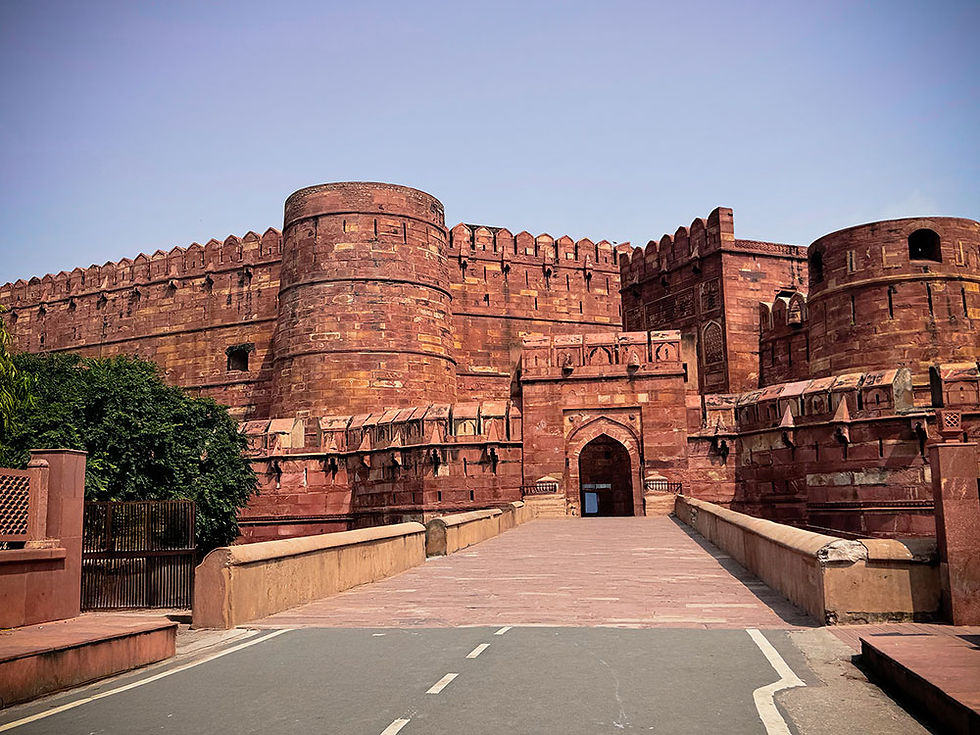
Agra Fort
Agra Fort impressed me with both its scale and sophistication. Built primarily of red sandstone and enhanced with marble additions, the fort served as the principal residence of Mughal emperors for generations. Walking through its vast courtyards and royal chambers provided a glimpse into the immense wealth and influence of one of the world's greatest empires.
Amber Fort, Jaipur
Amber Fort was one of the most visually stunning places I visited. Constructed in the early seventeenth century, it combines Rajput and Mughal architectural styles in a way that reflects the cultural blending that shaped much of Indian history.
The Hall of Mirrors, or Sheesh Mahal, was particularly memorable. Millions of tiny mirror fragments and coloured glass pieces adorn the walls and ceilings. Standing inside the hall, I could imagine how candlelight would have transformed the space into a dazzling display of light and reflection.

Mehrangarh Fort, Jodhpur
Towering approximately 120 metres above Jodhpur, Mehrangarh Fort is among the most impressive fortifications I have ever seen. Its massive walls dominate the landscape, projecting both strength and permanence.
Beyond its military significance, the fort houses an exceptional collection of royal artefacts, weapons, paintings, and historical records. The views across the blue city below are spectacular and provide a powerful sense of the strategic thinking that influenced the fort's construction.

City Palace Complex, Udaipur
Perhaps the most fascinating site I visited was the City Palace Complex in Udaipur. Perched above Lake Pichola, the palace represents centuries of architectural evolution and royal patronage.
What makes Udaipur unique is that it remains a living palace. The royal family still occupies part of the complex, while other sections have been transformed into museums and luxury hotels. Rather than preserving the palace as a static monument, the family has successfully integrated history with modern tourism and hospitality.

The End of Empire and the Birth of Modern India
India's transition to independence in 1947 marked one of the most significant political transformations of the twentieth century. After nearly two centuries of British rule, India emerged as a sovereign nation under leaders such as Mahatma Gandhi and Jawaharlal Nehru.
What struck me was the complexity of this transition. The newly independent government faced the enormous challenge of integrating hundreds of princely states into a single nation. Many royal families voluntarily acceded to India, helping to create the political unity that exists today.
The contribution of Indians during the colonial period is often overlooked. Millions served in various capacities throughout the British Empire, including more than 80,000 personnel in the Royal Indian Navy during the Second World War. These realities illustrate the complex relationship between India and Britain during the final decades of colonial rule.
How Royal Families Reinvented Themselves
One of the most remarkable aspects of modern India is how many royal families have adapted to changing circumstances.
Although they no longer exercise political authority, many have successfully reinvented themselves as entrepreneurs, conservationists, philanthropists, and cultural ambassadors.
I observed several common themes among these former royal households:
Historic palaces and forts have been transformed into world-class heritage hotels.
Museums preserve artefacts and stories that might otherwise have been lost.
Foundations support education, healthcare, and community development.
Family members participate in cultural and ceremonial events that strengthen local identity.
Heritage tourism generates employment and contributes significantly to regional economies.
Rather than disappearing into history, many royal families have found innovative ways to remain relevant while preserving their unique cultural legacy.

Udaipur: A Living Example of Royal Adaptation
The royal family of Udaipur provides one of the clearest examples of this transformation.
By carefully balancing heritage preservation with commercial enterprise, they have created a sustainable model that benefits both their family and the wider community. Their hotels attract visitors from around the world, while the museum educates future generations about Rajasthan's history.
Their participation in major international events, including G20-related activities, demonstrates that they continue to hold an important symbolic position within Indian society.
Reflections on India
My travels through India gave me a deeper understanding of how history continues to shape the present. The country's royal families are not simply remnants of a bygone era. They are active participants in preserving culture, protecting heritage, and contributing to modern economic development.
What impressed me most was India's ability to blend tradition with progress. Ancient palaces coexist alongside modern cities. Centuries-old customs continue in a rapidly developing economy. Royal families who once ruled kingdoms now operate hotels, museums, and charitable foundations while remaining guardians of an extraordinary cultural inheritance.
India's royal heritage is not merely a story of the past. It is a living legacy that continues to influence the nation today. My journey through Rajasthan revealed a country where history is not confined to museums—it remains part of everyday life, creating a rich cultural tapestry that continues to inspire visitors from around the world.
To continue reading Series 1 we invite you to join us:

Comments