
Blog 3: Varanasi – The Spiritual Centre of India

Updated: Jun 30
JOURNEY 4 - SERIES 1 - BLOG 3 - A PART OF 8 BLOGS IN SERIES 1 - Reading time: 4 Mins 30 Secs
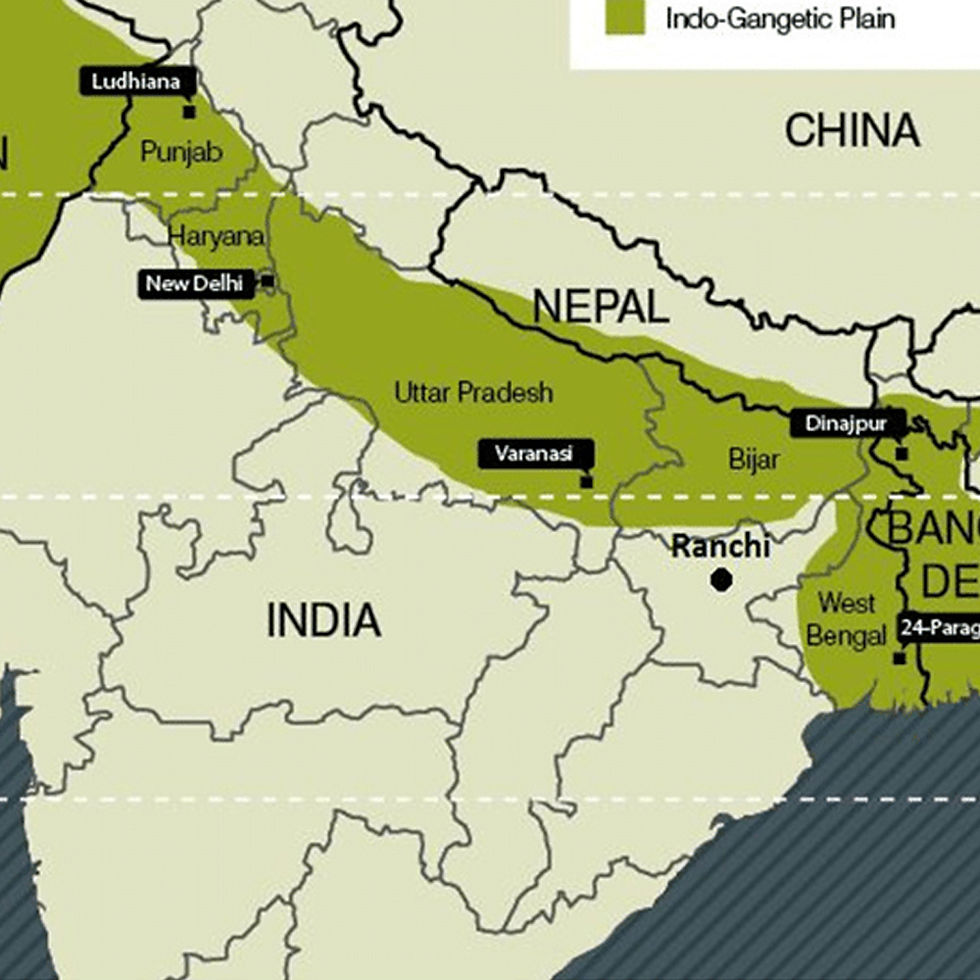
As part of my journey through India to understand how this remarkable country evolved and what continues to shape its identity today, I visited Varanasi, one of the most extraordinary places I have ever experienced.
If Rajasthan helped me understand India's royal heritage and the road to independence revealed the forces that shaped modern India, then Varanasi provided insight into something even deeper—the spiritual foundation upon which much of Indian civilization rests.
For many Hindus, Varanasi is not simply a city. It is the spiritual heart of India, the centre of the universe, and the dwelling place of the gods. It is a place where the boundaries between life and death, the physical and the spiritual, appear far less distinct than they do in most parts of the world.
Standing on the banks of the Ganges River, I quickly realised that Varanasi is unlike any city I have ever visited. It is a place where ancient beliefs remain fully alive and where religion is not confined to temples but permeates every aspect of daily life.
One of the World's Oldest Living Cities
Varanasi is situated on the western bank of the Ganges River in northeastern India and is regarded as one of the oldest continuously inhabited cities in the world.

Its recorded history stretches back at least 2,500 years, although many Hindus believe its origins are far older, extending into sacred time itself. According to Hindu tradition, Varanasi was founded by Lord Shiva, one of Hinduism's principal deities, and has remained under his divine protection ever since.
This belief gives the city a unique status. For millions of Hindus, Varanasi is not merely an ancient settlement—it is sacred ground where heaven and earth intersect.
As I walked through its narrow lanes and crowded streets, I was constantly reminded that this city has witnessed countless generations of pilgrims, priests, rulers, scholars, and ordinary people seeking spiritual meaning.
The Influence of Shiva and Hinduism
One of my most important discoveries was the role Varanasi played in shaping Hindu religious thought throughout India.
By the eighth century CE, worship of Shiva had become firmly established in Varanasi and gradually spread across much of the subcontinent. The city evolved into one of Hinduism's most important centres of learning, philosophy, ritual, and pilgrimage.
Over many centuries, scholars, priests, and spiritual leaders travelled to Varanasi to study sacred texts and deepen their understanding of Hindu beliefs. In many ways, the city became one of the great spiritual universities of the ancient world.
Today, its influence extends far beyond India. Hindu communities across the globe continue to regard Varanasi as the holiest city in their faith.
As I reflected on this, I began to appreciate how profoundly India has shaped the spiritual development of humanity. Few places have exerted such a lasting influence on the beliefs and practices of hundreds of millions of people.
The Sacred Ganges River
At the centre of Varanasi's spiritual life is the Ganges River.
To outsiders, it may appear to be simply a river. To Hindus, it is a living goddess whose waters possess the power to cleanse both physical and spiritual impurities.
Each year, an estimated 35 million pilgrims visit Varanasi. Some come to bathe in the sacred waters and wash away accumulated sins. Others come to perform rituals for deceased relatives. Many elderly pilgrims arrive hoping to spend their final days in the city, believing that death in Varanasi offers liberation from the endless cycle of birth, death, and rebirth known as samsara.
This concept fascinated me. In Hindu belief, the soul continually reincarnates until it achieves moksha—ultimate spiritual liberation. Varanasi is considered one of the few places on earth where this liberation can be attained more readily.
For many believers, dying here represents the culmination of a lifetime's spiritual journey.
The Ghats: Where Life and Death Meet
Perhaps the most striking feature of Varanasi is its seventy-nine ghats, the stone stairways that descend from the city into the Ganges.
From dawn until late at night, these ghats are alive with activity.

Pilgrims bathe, pray, meditate, chant, wash clothes, perform religious ceremonies, and gather with family members. Yet alongside these scenes of everyday life are public cremations taking place in full view of anyone passing by.
What struck me most was how naturally life and death coexist here.
In many Western societies, death is largely hidden from public view. In Varanasi, it is openly acknowledged as an integral part of existence.
The city does not seek to avoid death—it embraces it as a natural stage in the soul's journey.
Witnessing Ancient Cremation Rituals
One of the most confronting experiences of my visit was observing the cremation ceremonies conducted at the city's burning ghats.
Because of India's climate, cremations traditionally occur within hours of death.
The deceased is wrapped in white cloth and decorated with flowers. Male relatives carry the body through the streets toward the river while chanting prayers.
At the cremation ground, the body is placed upon a carefully prepared pyre, traditionally constructed from sandalwood and other timber. Family members perform a series of rituals before the eldest son lights the funeral fire.
The men remain until the cremation is complete.
Once the ashes have cooled, workers traditionally associated with the Dom community collect the remains and return them to the family. The ashes are then scattered into the Ganges River, symbolising the soul's final release from its physical form.
Watching this process was both confronting and deeply moving.
It forced me to reflect on mortality in a way few experiences ever have. What impressed me was the dignity, acceptance, and spiritual certainty with which these ceremonies were conducted.
For the families involved, death was not viewed as an ending but as a transition to another stage of existence.
Experiencing Varanasi from the Water
Some of my most memorable moments occurred while travelling on the Ganges itself.
At dawn, I joined a boat trip along the river. As the sun slowly rose above the eastern bank, thousands of pilgrims descended the ghats to bathe, pray, and greet the new day.
The scene was unlike anything I had ever witnessed.
Temple bells echoed across the water. Priests conducted rituals. Pilgrims immersed themselves in the river while reciting prayers passed down through generations.
The atmosphere was both peaceful and intensely spiritual.
In the evening, I returned to the river to watch the famous Ganga Aarti ceremony.
As darkness fell, priests dressed in ceremonial robes performed a carefully choreographed ritual involving fire, incense, chanting, and music. Hundreds of small lotus-shaped candles floated down the river, creating a magical spectacle of light reflected on the water.
Watching this ceremony from a boat was one of the highlights of my entire visit to India.
A City of Temples and Faith
Varanasi is said to contain approximately 3,000 temples.
As I explored the city, it often felt as though every street corner, alleyway, and marketplace contained a shrine or temple dedicated to a different deity.
Religion here is not something reserved for special occasions. It is woven into everyday life.
Priests offer blessings to pilgrims and visitors. Sacred marks known as tilaks are placed on foreheads as symbols of devotion and blessing. Married Hindu women often wear a bindi, a red mark symbolising spiritual awareness and marital status.
Everywhere I looked, I saw evidence of a society where faith continues to play a central role in personal identity and community life.

A City That Changes You
Of all the places I visited in India, Varanasi had perhaps the greatest emotional impact.
It is not a city that can be fully understood through photographs or guidebooks. It must be experienced.
The sights, sounds, smells, and emotions are often overwhelming. The city challenges many assumptions about life, death, spirituality, and the purpose of existence.
Visiting Varanasi requires an open mind and a willingness to confront realities that many modern societies prefer to keep hidden.
Yet that is precisely what makes it so powerful.
Reflections on Varanasi
As I left Varanasi, I understood why it occupies such a unique position in India's cultural and spiritual landscape.
Few cities in the world have maintained their religious significance for so long or continue to attract such devotion from so many people.
Varanasi is more than a city. It is a living expression of Hindu philosophy, a place where ancient traditions remain vibrant and where questions about life, death, and the human soul are explored every day.
My visit gave me a deeper appreciation of India's spiritual heritage and its influence on the wider world. If one wishes to understand how India shaped global civilization, Varanasi provides one of the most compelling examples.
For over two millennia, this remarkable city has drawn people seeking meaning, enlightenment, and liberation. Today, it continues to do exactly that.
To continue reading Series 1 we invite you to join us:

Comments