
Blog 2: How credible is the view Kupe discovered New Zealand and returned to Hawaiki?
- Kerry Paul

- Apr 23
- 3 min read
Updated: Jun 30
JOURNEY 1 - SERIES 1 - BLOG 2 - A PART OF 10 BLOGS IN SERIES 1 - Reading time: 2 Mins 30 Secs
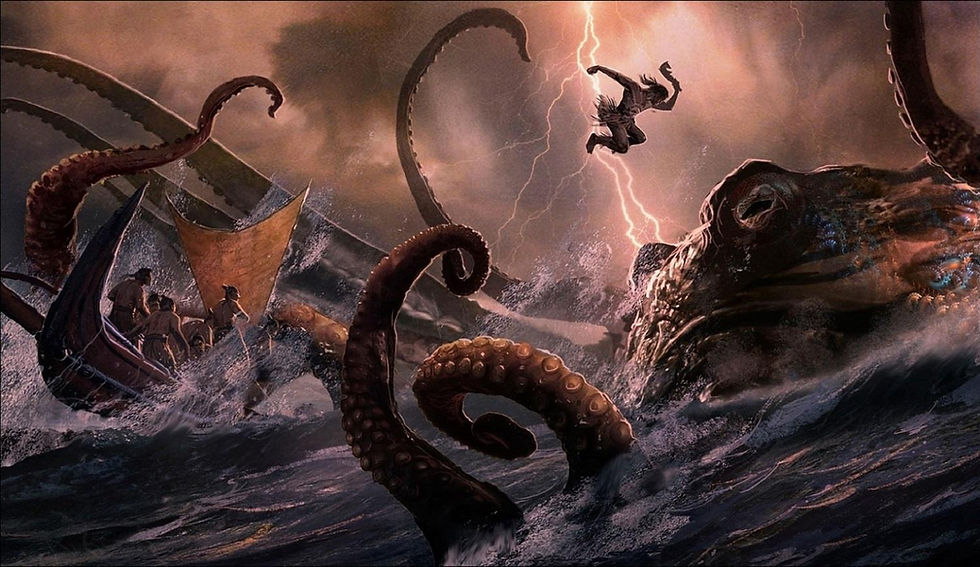

According to Māori oral tradition, Kupe discovered New Zealand returning to Polynesia after his exploration, although the manner of his return is conveyed through narrative rather than technical sailing detail. This narrative remains a cornerstone of New Zealand's origin story.
What the traditions record
Across accounts from many iwi, Kupe is consistently described as having:
Reached Aotearoa, explored sections of the coastline, and named significant places, particularly around Hokianga, Raukawakawa (Cook Strait), and Northland
Chosen not to settle, instead returning to Hawaiki aboard his waka, Matawhaorua (also known as Matahorua)
Departed from Hokianga, a memory preserved in the place name Te Hokianga a Kupe — “the returning place of Kupe”
Declared that he would not return, reinforcing the understanding of his journey as exploratory rather than migratory
In short, the traditions are explicit that Kupe returned, but they are not explicit about how he did so. While this account is central to the history of Polynesian Migration to New Zealand, it fails to account for a number of significant practical issues.
Most notably, if Kupe did return, how was the location of New Zealand communicated for future voyages without any system for recording routes? A more plausible interpretation is that Kupe represents a symbolic or ancestral figure, suggesting that later Polynesian voyages to New Zealand were exploratory rather than guided by precise prior knowledge.
What the traditions do not describe
Notably absent from the narratives are explanations of:
The specific route Kupe followed back to Hawaiki
How prevailing winds and ocean currents were managed or overcome
Whether the return depended on seasonal timing, unusual weather conditions, or chance events
These omissions are significant. Māori oral traditions are not intended as navigational manuals; their purpose is to preserve meaning, memory, and authority rather than technical instruction.

The belief that Kupe “discovered” New Zealand is better understood as a foundational New Zealand origin story rather than a literal historical discovery. Māori oral histories describe Kupe as an explorer who reached New Zealand, named places, and then returned to Hawaiki without settling, explicitly stating that he would not come back.

These traditions preserve cultural memory and meaning, not technical details of navigation or evidence of sustained migration. Crucially, the stories do not demonstrate that regular return voyages between Polynesia and New Zealand were feasible or common, nor do they establish Kupe as the first human arrival among New Zealand first settlers.
Modern scholarship therefore treats Kupe as a symbolic ancestor whose story anchors knowledge of New Zealand within Polynesian tradition, rather than as proof that New Zealand was “discovered” in the European sense or that his voyage initiated permanent settlement. In contrast, there is scientific evidence of Polynesian Migration to New Zealand at a later date.
Key Takeaway
Kupe is best understood as a symbolic ancestor, suggesting later Polynesian voyages to New Zealand were exploratory rather than based on precise prior knowledge.
This discussion adds another dimension to New Zealand’s origin story. These migration patterns contribute to broader debates surrounding Southeast Asian migration to New Zealand and are frequently compared with established interpretations of Polynesian migration to New Zealand. Together, these competing perspectives continue to shape ongoing discussions about New Zealand’s first settlers.
To continue reading the Series:


Comments