
Blog 5: Paths to New Zealand: Migration, Maritime Crews, and the Foundations of Settlement

Updated: Jun 30
JOURNEY 1 - SERIES 3 - BLOG 5 - A PART OF 6 BLOGS IN SERIES 3. - Reading time: 4 Mins 30 Secs
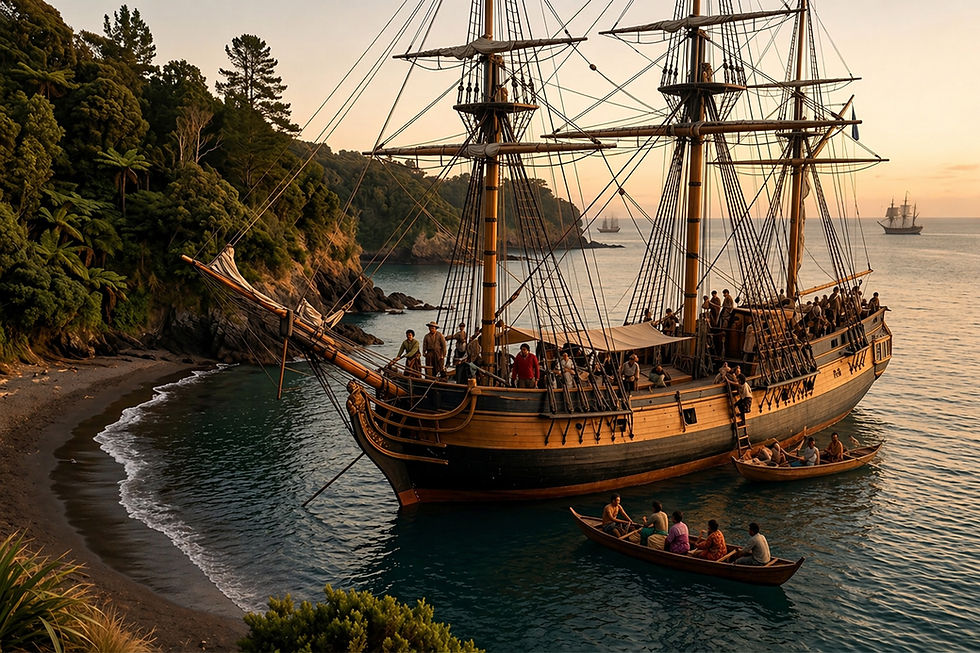
The movement of people into new regions raises important questions about their motivations, the organisation and crewing of the vessels they used, and the demographic challenges they faced. Settlers from Southeast Asia and New Guinea encountered many of the same human and logistical challenges experienced by migrant groups elsewhere. This discussion adds another dimension to New Zealand's origin story. This discussion adds another dimension to New Zealand’s origin story. These migration patterns contribute to broader debates surrounding Southeast Asian migration to New Zealand and are frequently compared with established interpretations of Polynesian migration to New Zealand. Together, these competing perspectives continue to shape ongoing discussions about New Zealand’s first settlers.
Shared Motivations for Migration:
The pursuit of gold and other valuable resources has historically driven human movement, shaping trade routes and settlement patterns. Southeast Asia’s accessibility to gold would have made it a hub for traders and explorers, encouraging further expansion beyond the region.
The motivations for migration—whether in ancient times or today—remain strikingly similar. People have always sought better opportunities, safety, and stability, whether fleeing conflict, environmental challenges, or economic hardship. The idea that migrants might settle temporarily before continuing their journey aligns with historical accounts of nomadic and seafaring cultures.
Diverse Crews:
Scurvy and desertions remained significant challenges for maritime expeditions even into the late 18th century. To ensure sufficient manpower for operating the ship, captains often had to enlist new crew members before embarking on their next voyage. Ships planning to sail down the east coast of Australia towards New Zealand would likely recruit men and women from the ports they visited. These diverse recruits, drawn from various backgrounds, could potentially form the foundation of a population in a new country. Their skills, traditions, and experiences would contribute to the unique cultural identity of the emerging society.
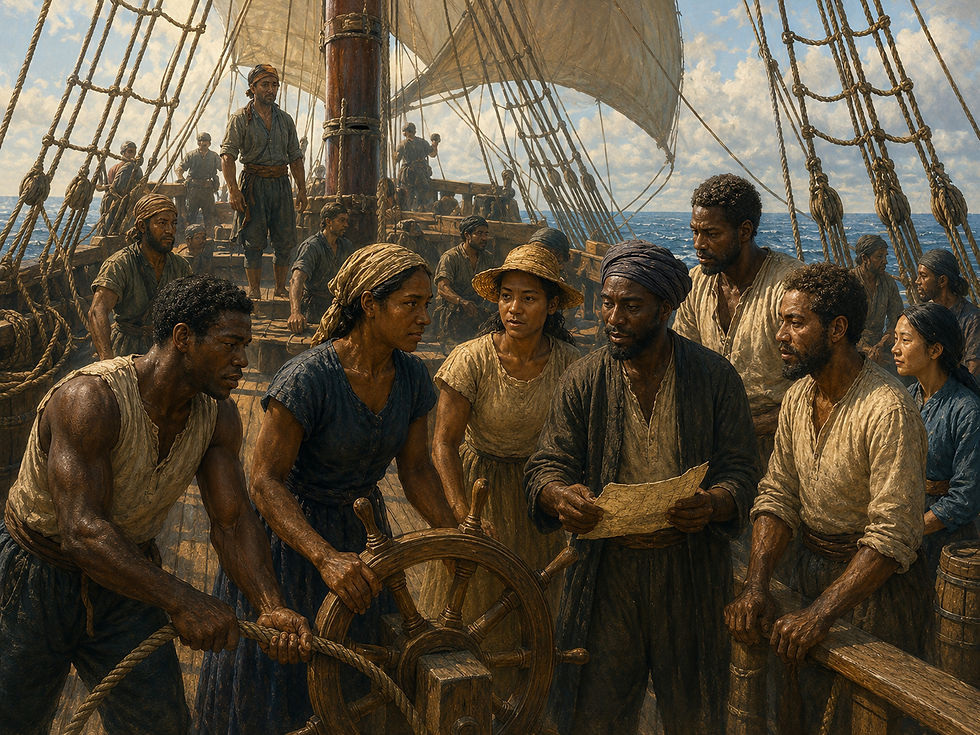
Demographic Challenges: the demographic and logistical challenges of settling in a new land are considerable. For any population to thrive in a new territory, a significant number of women of child-bearing age would need to be part of the migrants. They would play a critical role in ensuring population growth and stability over generations.
Additionally, the rate of establishment would undoubtedly be influenced by factors like:
Gender ratio at birth: With roughly half of births being male, a balanced population structure would be essential for long-term stability.
Life expectancy: life expectancy was significantly lower than today, further limiting the window for reproduction and overall population sustainability.
Healthcare and survival rates: High infant and maternal mortality rates in pre-modern times would pose yet another challenge to sustaining a growing population.
Cultural and social structures: These would dictate the roles and contributions of each woman within the settlers group to help maintain a functioning community.
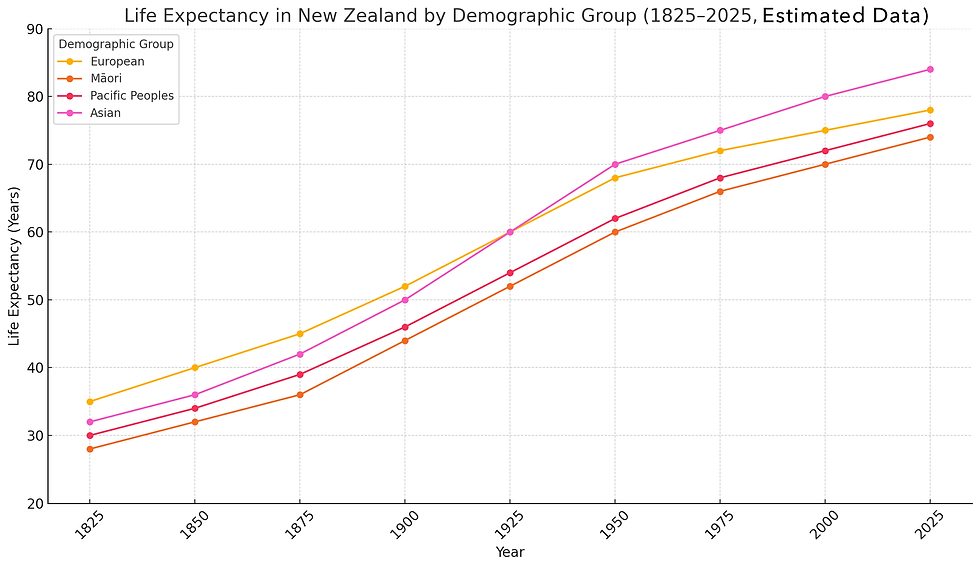
Establishing a sustainable settler population involves intricate logistics and careful resource management. Here are some factors that need to be addressed:
Number of Migrants: The population size must be large enough to ensure genetic diversity and socio-economic stability. This involves analyzing demographics like age, skill sets, and health conditions.
Ships and Resources: Calculating the number of ships required would depend on the carrying capacity of each vessel. Each ship must accommodate passengers, crew, supplies (including food and water), and essential tools/materials for establishing infrastructure.
Voyage Duration: the length of the journey impacts how much food and water needs to be carried. For longer voyages, storage methods are vital.
Settlement Supplies: beyond the journey, settlers would need resources to construct shelter, secure water supplies, and establish food sources to survive in the new environment.
Key Takeaways
Migration into the New Zealand region fits a global and timeless pattern of human movement. People from Southeast Asia and New Guinea were motivated by familiar drivers—access to valuable resources (such as gold), economic opportunity, safety, and environmental pressures. Migration was not necessarily a single, permanent decision; many groups likely moved incrementally, settling temporarily before continuing onward, consistent with long‑standing nomadic and seafaring traditions.
Maritime voyages created culturally diverse founding populations. Long-distance sea travel imposed severe challenges, including scurvy, crew losses, and desertion. As a result, ships often recruited new crew members at multiple ports, leading to vessels with ethnically and culturally mixed crews. These diverse maritime communities—men and women from different regions—may have formed the social and cultural foundations of early settlement, bringing varied skills, traditions, and experiences that shaped emerging societies in new lands.
Sustainable settlement depended on complex demographic and logistical factors.
To continue reading Series 3 we invite you to join us:


Comments