
Blog 2: How Manuka Health Used Science to Redefine Mānuka Honey
- Kerry Paul

- Jun 10
- 4 min read
Updated: Jun 30
JOURNEY 3 - SERIES 3 - BLOG 2 - A PART OF 4 BLOGS IN SERIES 3 - Reading time: 4 Mins


When Manuka Health was founded in 2006, manuka honey was still a relatively small and poorly understood product category internationally. Although some awareness existed around its antibacterial properties, global demand remained limited because the industry could not scientifically explain why manuka honey was different from ordinary honey. This case study highlights the international growth of Manuka Honey. The journey also reflects the realities faced by many New Zealand start-up businesses. These lessons provide valuable insights for New Zealand entrepreneurs. The experience demonstrates the challenges and opportunities involved in Building a Global business from New Zealand.
Under the leadership of Kerry Paul, Manuka Health transformed manuka honey from a niche New Zealand product into a scientifically validated global natural health category. The company achieved this by combining science, branding, innovation, and international market development into a highly differentiated business strategy.
Identifying the Missing Piece
A major obstacle facing the manuka honey industry before 2006 was credibility. While researchers such as Professor Peter Molan had previously demonstrated that manuka honey possessed stable antibacterial activity, the actual compound responsible remained unknown. This limited acceptance among scientists, medical professionals, and consumers.

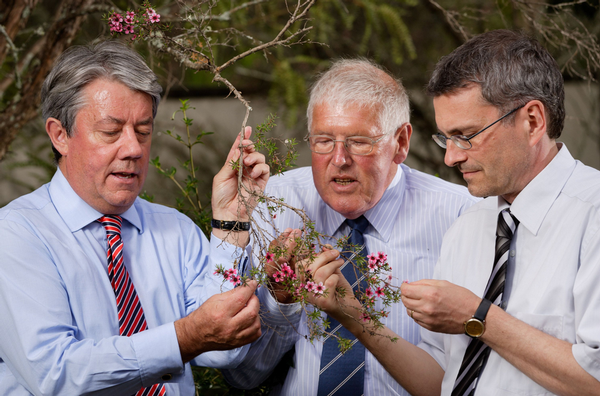
Kerry Paul recognised that identifying the active compound would fundamentally change how manuka honey could be marketed globally. In 2007, Manuka Health announced a partnership with Professor Thomas Henle of the Technical University of Dresden, whose research identified methylglyoxal (MGO) as the key antibacterial compound in manuka honey.

Thomas Henle is internationally recognised for his pioneering research into the chemical changes that occur during food processing, particularly the Maillard reaction — the complex interaction between sugars and proteins that influences flavour, colour, and biological activity in foods. His work has focused extensively on understanding how proteins, carbohydrates, and bioactive peptides are transformed during processing and how these changes affect human health and nutrition.
This deep expertise in food chemistry and bioactive compounds placed Professor Henle in a uniquely strong position to identify the compounds responsible for the stable antibacterial activity in Manuka honey. His scientific capabilities made him the ideal research partner for Manuka Health in the groundbreaking discovery of methylglyoxal (MGO) as the key antibacterial compound in manuka honey — a breakthrough that would ultimately transform the global manuka honey industry.
This discovery became a turning point for the entire industry.
Professor Henle and his research team demonstrated that methylglyoxal was directly responsible for the antibacterial activity of manuka honey.
Importantly, they also discovered:
Manuka honey contained exceptionally high concentrations of MGO
Most other honeys contained only trace amounts

This changed everything.
For the first time, the industry could scientifically explain:
Why manuka honey was unique
Why antibacterial activity varied between batches
Why higher-grade manuka honey justified premium prices
The discovery shifted manuka honey from a vague traditional wellness product into a scientifically measurable natural healthcare product.
Turning Science into a Global Marketing Platform
Rather than continuing to market manuka honey using vague or inconsistent grading systems, Manuka Health introduced a robust scientific standard based on measurable MGO concentration. In 2008, the company launched the MGO rating system internationally across 45 export markets.

This transformed consumer understanding of manuka honey. For the first time:
Consumers could measure antibacterial strength scientifically
Scientists could validate the product’s unique properties
Retailers could position the product as a premium natural healthcare solution
The industry gained credibility within global wellness markets
The move represented a major disruptive innovation within the manuka honey industry.
Kerry Paul understood that consumers increasingly wanted scientifically proven natural health products, not simply traditional wellness claims. Manuka Health’s positioning — “Given by Nature, Proven by Science” — perfectly captured this strategy.
Creating a New Premium Category
Before the introduction of MGO marketing, manuka honey was often treated similarly to conventional honey products. By scientifically validating methylglyoxal concentration, Manuka Health repositioned manuka honey into the premium natural healthcare category.
This allowed the company to:
Justify premium pricing
Expand into international wellness markets
Attract educated health-conscious consumers
Differentiate manuka honey from all other honeys globally
Importantly, the scientific credibility generated enormous international interest. Researchers worldwide began publishing studies on methylglyoxal and manuka honey, which accelerated consumer confidence and demand growth.
According to Kerry Paul’s account, global sales of manuka honey “grew exponentially” following the introduction of MGO-based marketing.
Science alone was not enough. Manuka Health also built an extensive international distribution network focused on natural health channels and educated wellness consumers.
Under Kerry Paul’s leadership, the company expanded into 45 countries within less than ten years, building annual sales to $73 million and employing more than 120 staff before its eventual sale in 2015–2016.
The strategy focused on:
Premium health retailers
Science-based branding
Consumer education
Supply-chain reliability
Innovation-led product development
This international expansion helped transform manuka honey from a small New Zealand specialty product into a globally recognised premium health category.
Innovation Beyond Honey
Manuka Health did not stop at selling jars of honey. The company invested heavily in research and innovation to create high-value products incorporating manuka honey bioactives.
Examples included:
Medical-grade wound-care products
Skincare products
Controlled delivery technologies
Advanced bioactive formulations
These innovations moved the company “a long way from a pot of honey,” creating higher-value healthcare-oriented applications.
By linking New Zealand natural bioactives with advanced science and technology, Manuka Health expanded the commercial potential of the industry well beyond traditional honey markets.
To continue reading Series 3 we invite you to join us:

Building a Successful Business
$40
Free Shipping within New Zealand
For international shipping enquiries please contact: kerryjpaul@gmail.com


Comments