

BLOG 7: What are the connections between the canal networks of the Lower Wairau River Waterways and the Awanui River Canal System with those of the Mekong Delta?
- Kerry Paul

- Mar 22
- 2 min read
Updated: Apr 13

A detailed description of the New Zealand ancient canal networks can be seen at: https://www.kerrypaul.co.nz/post/24-what-can-we-learn-from-canal-networks-established-around-new-zealand-long-ago

Ancient Southeast Asian Canal Systems
There is a significant presence of canal networks in ancient Southeast Asia, particularly in the Mekong Delta region. A leading example is Oc Eo, a major trading port in Vietnam, being situated within a network of ancient canals that connected settlements and facilitated maritime trade. One canal linked Oc Eo directly to its seaport, underscoring the importance of water management and connectivity in early Southeast Asian societies.
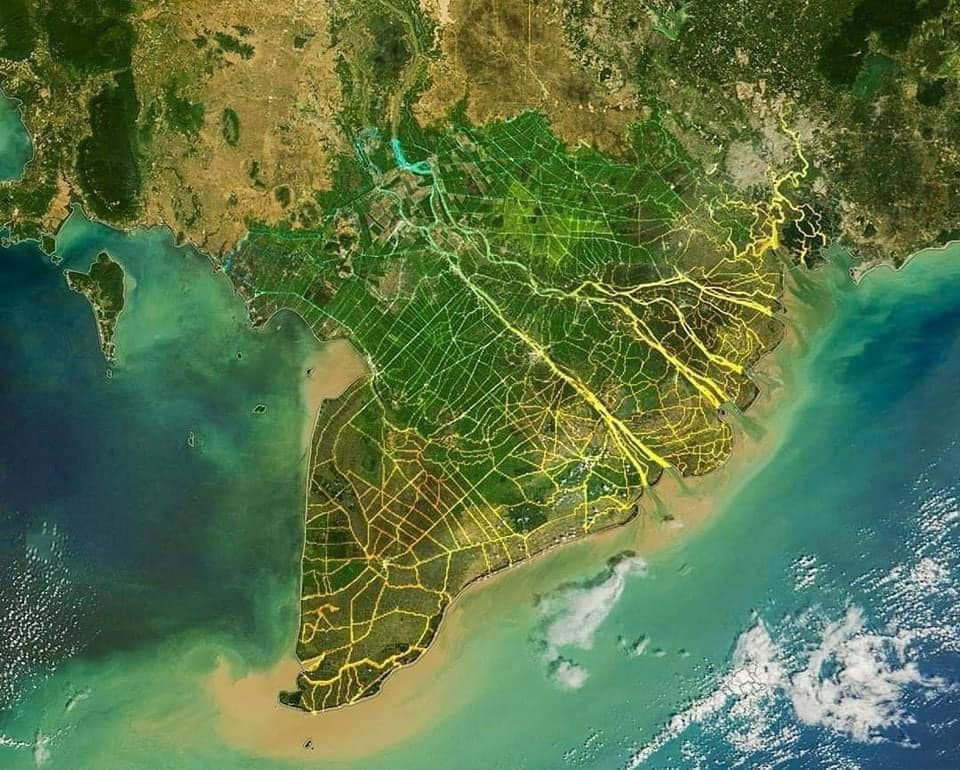
These canals served several critical functions:
Water Management: Canals were essential for draining swamps, managing floods, and supporting agriculture. They enabled the transformation of wetlands into productive farmland, which was vital for sustaining large populations.
Irrigation: Sophisticated canal systems allowed for the distribution of water to crops, ensuring reliable food production even in challenging environments.
Connectivity and Trade: Canals linked settlements and facilitated maritime trade. For example, at Oc Eo, canals connected the city directly to its seaport, highlighting their role in economic exchange and regional integration.
Technological Exchange: The development and maintenance of these networks required advanced engineering knowledge, which was often shared or influenced by cultural interactions, such as the process of Indianisation that brought new technologies and infrastructure to Southeast Asia.
These canal networks were not only feats of engineering but also evidence of complex societies capable of large-scale, long-term projects. Their functions—water management, irrigation, connectivity, and technological exchange—were foundational to the growth and sustainability of ancient Southeast Asian civilizations.
New Zealand Canal Networks
New Zealand is home to significant historical engineering achievements, notably the construction of canals for swamp drainage to support agriculture and fish management.
Two prominent examples include:
Lower Wairau River Canal System: Documented in 1912, this network extends approximately 20 km, with a width of 3 metres and a depth ranging from 60 to 90 cm. The project required the excavation of around 60,000 cubic metres of soil.
Awanui River Canal System: Detailed in 1928, this complex system of drains borders the Awanui River in Kaitaia. Many former lakes and swamps were drained, with some channels exceeding twenty feet in depth and the largest extending over a mile. Modern drainage channels now overlay much of the original network, which remains vital for cultivation and flood prevention.
Both canal systems exemplify extensive, long-term engineering efforts carried out manually over centuries.
Both Southeast Asian and New Zealand canal networks exemplify the ingenuity and adaptability of their respective societies. While Southeast Asia’s ancient canals were central to the development of complex civilizations and maritime trade, New Zealand’s canal works reflect more recent engineering achievements aimed at transforming the landscape for agriculture and settlement. The comparison highlights how water management and connectivity have been foundational to human development across different regions and eras.
Do you think this provides further evidence about the origins of New Zealand’s first settlers? Let us know in the comments or send me an email. Read the next blog in the series: BLOG 8: Can the origin of artefacts discovered in New Zealand be linked to Southeast Asia?


Comments