
Blog 7: Innovation Is Essential for Long-Term Business Success

Updated: Jun 30
JOURNEY 3 - SERIES 1 - BLOG 7 - A PART OF 9 BLOGS IN SERIES 1 - Reading time: 5 Mins 30 Secs

When building global businesses is that standing still is not an option. In competitive international markets, innovation is not a luxury or a fashionable management term — it is fundamental to survival. Businesses that stop innovating eventually become irrelevant because competitors catch up, customer expectations evolve, and markets move on. This case study highlights the international growth of Manuka Honey. The journey also reflects the realities faced by many New Zealand start-up businesses. These lessons provide valuable insights for New Zealand entrepreneurs. The experience demonstrates the challenges and opportunities involved in Building a Global business from New Zealand.
As we expanded Manuka Health internationally, distributors, retailers, and consumers were always asking the same question: “What’s next?” If you cannot demonstrate a strong pipeline of credible new products and ideas, people quickly lose confidence in the future direction of the business.
Innovation therefore became far more than product development. It became one of the core strategic capabilities that determined whether the company could sustain growth and remain internationally competitive over the long term.
Innovation Begins with Strategy
Innovation without direction can become expensive chaos. Companies can waste enormous amounts of time and money chasing ideas that never create meaningful customer value.
For innovation to work, it is essential to first define a clear innovation strategy.
That meant asking difficult questions:
What unique value are we trying to create?
How will our innovations differentiate us from competitors?
Will customers genuinely pay a premium for the improvement?
Can the innovation strengthen our long-term competitive position?
These questions forced discipline into the innovation process. They ensured innovation remained connected to commercial outcomes rather than becoming science for its own sake.
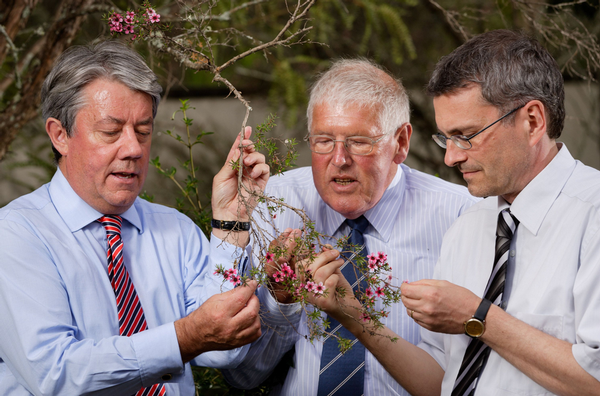
At Manuka Health, our guiding concept was captured in the phrase: “Given by Nature, Proven by Science.” This statement became much more than a marketing slogan. It became a strategic framework that shaped decision-making across the entire organisation. Every product, research initiative, and innovation opportunity was assessed against this philosophy. We wanted to combine New Zealand’s unique natural bioactives with rigorous scientific validation capable of building global credibility.
Innovation Requires Organisational Alignment
Innovation cannot succeed if the organisation is fragmented. Innovation projects are often expensive, uncertain, and time-consuming. Without alignment between shareholders, directors, management, scientists, and commercial teams, innovation programmes quickly lose momentum.
One of leadership’s most important responsibilities is ensuring everyone remains committed to the innovation pathway, even when projects encounter setbacks or take longer than expected. This becomes particularly important in New Zealand businesses where resources are limited and every investment decision carries greater significance.
For innovation to succeed, the entire organisation must understand why it matters and how it contributes to the long-term future of the company.
Understanding the Different Types of Innovation
Innovation should be viewed as a structured process operating across three levels.
Routine Innovation
The first level is routine innovation. This involves improving or extending products and capabilities the business already possesses. These innovations are generally lower risk because they build upon existing supply chains, customer relationships, manufacturing capability, and technical expertise.
Routine innovation helped us maintain momentum in the market, refresh product ranges, and continue delivering incremental value to consumers without fundamentally changing the business model.
Disruptive Innovation
The second level is disruptive innovation. These innovations reshape competitive dynamics within an industry and often force competitors to respond.
Our decision to market manuka honey based on methylglyoxal (MGO) concentration became one of the most significant disruptive innovations within the manuka honey sector. Rather than relying on vague and inconsistent grading systems, we introduced measurable scientific validation linked directly to antibacterial activity.
That decision fundamentally changed how consumers, regulators, retailers, and competitors viewed manuka honey. It repositioned the category from traditional food marketing toward science-based natural healthcare.
Disruptive innovation creates enormous opportunity, but it also provokes strong competitor reactions because it threatens established market positions and business models.
Radical Innovation
The third level is radical innovation. This involves entering entirely new scientific, technological, or commercial territory. Radical innovation is the highest risk category because it often requires advanced research capability, regulatory approvals, significant investment, and external collaboration.
Radical innovation can create substantial long-term value, but businesses must approach it carefully and selectively. Not every company has the resources or patience required to sustain large-scale innovation programmes over many years.

Why Structure and Discipline Matter
One misconception many people have about innovation is that it is purely creative and spontaneous. My experience was the opposite. Successful innovation requires enormous discipline and process management.
We developed structured New Product Development systems that moved projects through clearly defined stages:
Concept development
Scientific validation
Product formulation
Packaging design
Costing analysis
Regulatory review
Consumer testing
Commercial launch
If products failed to meet required standards at any stage, they were stopped or redesigned. This discipline prevented the company from becoming distracted by too many weak or poorly developed ideas.
Innovation is not about pursuing every opportunity. It is about selecting the right opportunities and executing them exceptionally well.
Combining Internal Capability with External Expertise
As the business grew, managing successful innovation often requires combining internal capability with external expertise.
We worked with scientists, universities, laboratories, packaging specialists, designers, and regulatory experts when necessary. However, I believed strongly that the core intellectual property and strategic knowledge needed to remain inside the business.
External partnerships can accelerate innovation, but companies must avoid becoming completely dependent on outside organisations for their competitive advantage.
Balancing external collaboration with internal capability became an important part of building sustainable innovation capacity.
Turning Science into Consumer Understanding
Developing scientific evidence is only part of the challenge. Translating complex science into language consumers can understand is equally important.

Scientific credibility requires research publication, data integrity, laboratory validation, and regulatory compliance. However, consumers ultimately need simple explanations of:
What the product does
Why it matters
How it benefits them
Why it differs from alternatives
This created an ongoing educational challenge for the company. Every innovation required new communication strategies capable of simplifying complex science without compromising credibility.
In many ways, successful innovation requires businesses to bridge two very different worlds: rigorous science and effective consumer communication.
Innovation Must Become Part of the Company’s DNA
Looking back, I now see innovation less as a series of individual products and more as an organisational system and mindset.
The companies that sustain long-term growth are those that build innovation into their culture, decision-making, and strategic thinking. Innovation should not occur occasionally when markets become difficult. It should become embedded within the DNA of the business itself.
Importantly, innovation also creates confidence internally. Employees become energised by new ideas and future opportunities. Distributors gain confidence that the company has long-term growth potential. Retailers remain engaged because there is always something new to present to customers.
What is Key to Innovation?
The biggest lesson I learnt is this: innovation is not luck. It is a deliberate, structured, and disciplined process that balances creativity with commercial reality.
Successful innovation requires:
Clear strategic direction
Organisational alignment
Scientific credibility
Structured development systems
Strong leadership
Long-term commitment
The courage to take calculated risks
Not every innovation succeeds. Some fail completely. However, if businesses build a strong innovation platform and continue learning, enough successful innovations emerge to transform the company over time.
For New Zealand businesses competing internationally, innovation is especially important because we cannot rely on scale or low-cost manufacturing advantages. Our future depends on creating differentiated products, intellectual property, scientific credibility, and premium global brands that competitors struggle to replicate.
Ultimately, innovation is not something a business occasionally does — it is what keeps the business alive.
To continue reading Series 1 we invite you to join us:

Building a Successful Business
$40
Free Shipping within New Zealand
For international shipping enquiries please contact: kerryjpaul@gmail.com


Comments