

9. What academic support exists for Portuguese discovering Australia and NZ in 1522/23?
- Kerry Paul

- Sep 9, 2025
- 1 min read

Jose Alberto Leitao Barata (2003) discovered references to Mendonca’s expedition in the 1962 work of Padre Antonio da Silva Rego, who sourced Portuguese records in Mozambique (unaffected by Lisbon earthquake/fires) where the Portuguese had bases in the sixteenth century.
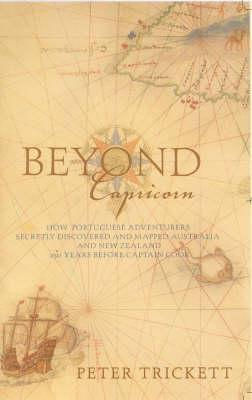
Peter Trickett, Beyond Capricorn (2007) conducted a detailed process of identification of Australian coastal features which is critical to proving the accuracy of the Vallard Map. By translating the Portuguese place names, he demonstrated they accurately describe the physical feature on the modern map.
Portuguese navigators often named geographical features based on their physical characteristics, which helped in identifying and navigating these areas. For example, they might name a mountain "Serra" (meaning "mountain range") or a river "Rio" (meaning "river"). This practical approach was useful for navigation and mapping.
On the other hand, English and French explorers tended to name places after people, places, or events from their homeland. This was a way to honour their culture and heritage, and it often reflected their desire to claim and establish a presence in new territories. For instance, the English might name a place "New York" after the city of York in England, or the French might name a place "Louisiana" in honour of King Louis XIV.
Further contributions supporting the visit by Mendonca in 1522/23 are outlined in the following Blog.


Comments